


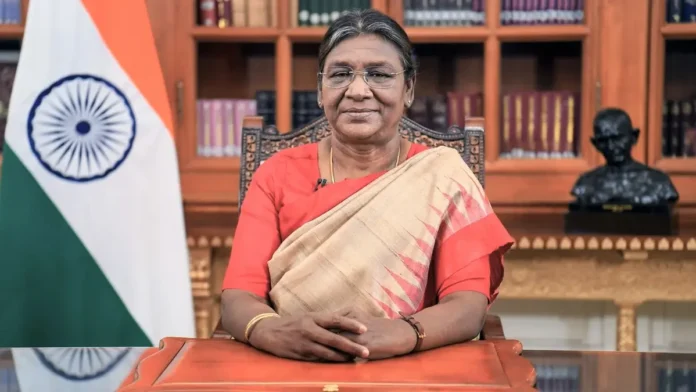
With President Droupadi Murmu’s approval, the Waqf (Amendment) Bill 2025 became a law on Saturday. Additionally, President Droupadi Murmu approved the Mussalman Wakf (Repeal) Bill, 2025. “The following Act of Parliament received the assent of the president on April 5, 2025, and is hereby published for general information: The Waqf (Amendment) Act, 2025,” the government said in a notification.
Days after hours of deliberation, the controversial bill was approved by both Houses of Parliament. The Rajya Sabha passed the law on Friday following an equally lengthy and contentious debate, but the Lok Sabha cleared it early Thursday morning. Asaduddin Owaisi, the head of the All India Majlis-e-Ittehadul Muslimeen (AIMIM), and Congress MP Mohammad Jawed have both filed separate appeals challenging the constitutionality of the measure, which is already facing challenges in the Supreme Court.
While debating and discussing the Bill, both Houses were up beyond midnight. A day after the lower house approved the Waqf Amendment Bill, the Rajya Sabha also passed the Mussalman Wakf (Repeal) Bill, 2024, during a 17-hour session. Prime Minister Narendra Modi referred to Friday’s passage of the contentious Waqf (Amendment) Bill, 2025 and the Mussalman Wakf (Repeal) Bill by the Rajya Sabha as a “watershed moment” and stated that the laws would assist those who have been denied a voice and an opportunity.
He also thanked the members of Parliament and the public for providing feedback to the Joint Parliamentary Committee, which was tasked with recommending changes to the measure. “The passage of the Waqf (Amendment) Bill and the Mussalman Wakf (Repeal) Bill by both Houses of Parliament marks a watershed moment in our collective quest for socio-economic justice, transparency, and inclusive growth. This will particularly help those who have long remained on the margins, thus being denied both voice and opportunity,” a part of Modi’s long post on X read.
As anticipated, the Center and the Opposition engaged in a heated debate over the Bill in both the Lok Sabha and the Rajya Sabha. According to Union Minister Kiren Rijiju, who introduced the bill in both Houses, no community’s rights are violated or taken away. However, the opposition maintained that the Bill was “anti-Muslim” and “unconstitutional.”