


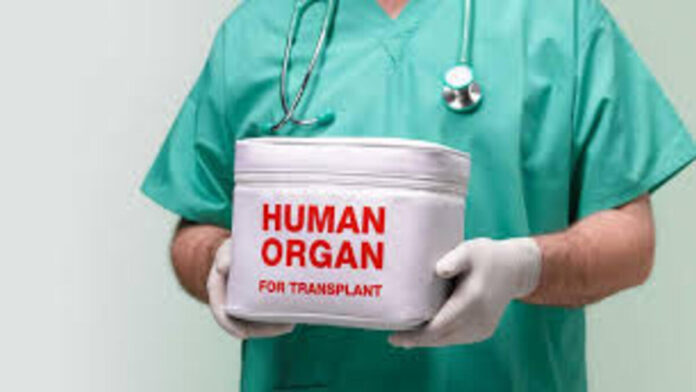
In order to create uniform guidelines for registration, allocation, and other parts of the procedure, the Union Health Ministry is developing a “One Nation, One Organ Allocation” strategy in consultation with the states, according to official sources.
Recently, the Supreme Court ordered the Health Ministry to investigate and take appropriate action regarding some states’ requirements that patients wanting to register in the cadaver transplant registry for organ donation submit copies of their domicile certificates.
A uniform policy “will assist patients in seeking transplant from deceased donors at any hospital in the nation giving them a lot of flexibility,” an official source claimed.
The ministry has already advised states to eliminate the domicile requirement for registering people who want organs from deceased donors for transplant operations as part of its efforts to strengthen the policy.
Additionally, it has eliminated the 65-year-old age restriction for patients registering to receive organs from dead donors.
The National Organ & Tissue Transplant Organization (NOTTO) has made the required adjustments to the regulations, enabling patients 65 years of age and older to register for organ transplants from deceased donors.
“Previously, a patient’s age could not exceed 65 when applying for organ transplants from deceased donors. Patients of all age groups can apply for deceased donor organs now that this restriction has been lifted. The NOTTO’s website has been updated with the revised rules “a trusted source reported.
Additionally, noting that some states have been charging fees ranging from Rs 5,000 to 10,000 for registering such patients, the Union Health Ministry has requested that they not do so, claiming that doing so is against the Transplantation of Human Organs and Tissues Rules, 2014’s provisions. This was reported by official sources on Thursday.
According to an official, states like Telangana, Maharashtra, Gujarat, and Kerala have been levying such costs.
Organ transplants increased from 4,990 in 2013 to 15,561 in 2022, according to official statistics. From 2013 to 2022, there will be a total of 9,834 kidney transplants from living donors, up from 3,495 in 2013, and 1,589 transplants from dead donors.
From 658 in 2013 to 2,957 in 2022, there will have been a total of 2,957 liver transplants from living donors, and there will have been 761 liver transplants from dead donors.
Between 2013 and 2022, there will be 250 heart replacements overall, compared to 23 lung transplants.