


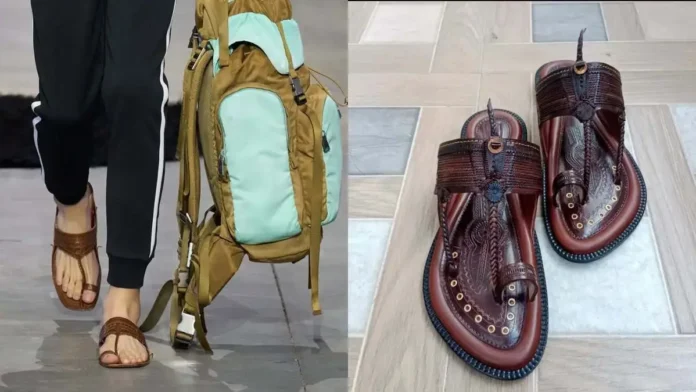
Seeing India shine on the global fashion stage fills many of us with pride. Whether it’s Rahul Mishra captivating crowds at Paris Couture Week, Gaurav Gupta creating drama at the Met Gala, or Indian embroidery winning praise from luxury houses like Dior, our fashion identity is finally getting the spotlight it deserves — and we’re loving it.
But there’s a bitter side to this celebration. Too often, international fashion brands take Indian crafts for granted. They borrow, remix, and repackage traditional Indian designs, presenting them as their own without any nod to where they came from.
The same rich design ideas, the same time-honored textiles, and embroidery techniques are put on a fancier stage but rarely credited to their Indian roots. Take Prada, for example. They recently showcased Kolhapuri chappals in Milan, priced at over Rs 1.25 lakh. Yet, Kolhapuri chappals are much more than stylish sandals — they’re a centuries-old heritage craft handmade by artisans in Maharashtra and Karnataka. Prada made no effort to acknowledge that legacy.
Unfortunately, this isn’t an isolated incident. Luxury labels have long “borrowed” from India, sometimes calling it “inspiration,” and other times just taking it without even that excuse. Indian fashion often gets exoticized or spiritualized, or worse, rebranded under Western labels with no mention of its true origins.
A recent example was Alia Bhatt’s debut at Cannes 2025. Gucci called her outfit a “gown” in their official post, even though Alia herself said it was a saree-inspired look, a detail that matters deeply because the essence of the outfit is rooted in Indian tradition. On top of that, social media noticed the design closely resembled a lehenga by Indian brand Talking Threads, but no credit was given.
Delhi designer Anupamaa Dayal’s story adds another troubling layer. Known for her spiritual and botanical designs, she found several of her creations copied by Argentinian label Rapsodia. When she confronted them, the brand ignored her and asked for proof like trademarks — highlighting how weak legal protections are for independent fashion designers in India.
But Dayal didn’t give up. She sent a legal notice demanding an apology and said the experience, though upsetting, reminded her how important her work really is.
Then there’s the “Scandinavian scarf” saga, where the humble Indian dupatta was rebranded by Western influencers as a trendy “Scandi girl scarf”, completely erasing its rich South Asian heritage. Similar rebrandings happen all the time, with saree blouses called “Ibiza tops” or kurtis marketed as “sheer dresses.” Indian communities have pushed back hard on social media, using humor and memes to reclaim their culture.
Even big names like Dior have faced accusations. Beauty influencer Chiara King’s Dior sharara look sparked chatter about missing Indian credit. Dior had been called out before, in 2018, for copying a Rajasthani block print made by artisans who’ve struggled for decades. The same dress later appeared on Sonam Kapoor for a magazine cover, more fame for the design but no mention of the artisans.
Gucci stirred controversy in 2019 with a turban-style head wrap they priced at Rs 68,000 and called “Indy Full Turban.” This upset the Sikh community, as turbans are sacred in their religion. After backlash, Gucci changed the name but the incident showed how cultural items get trivialized when taken out of context.
Even iconic shows like Jean Paul Gaultier’s 2017 Paris runway have their share of issues. Models wore saree-inspired looks and traditional Indian nose rings, but with no cultural background turning meaningful symbols into just props for fashion.
These aren’t rare slip-ups; they’re part of a bigger pattern in global fashion where Indian heritage is treated like a pretty moodboard, not a culture to respect. Inspiration is natural, but there’s a big difference between inspiration and appropriation and that difference is about giving credit, collaborating fairly, and compensating artisans properly.
The fashion world needs to rethink how it treats Indian crafts and those who keep these traditions alive. Kolhapuri chappals, block prints, shararas, naths, these are more than designs. They’re stories, skills, and lifetimes of work. When brands ignore that, they aren’t just borrowing, they’re erasing a culture.