


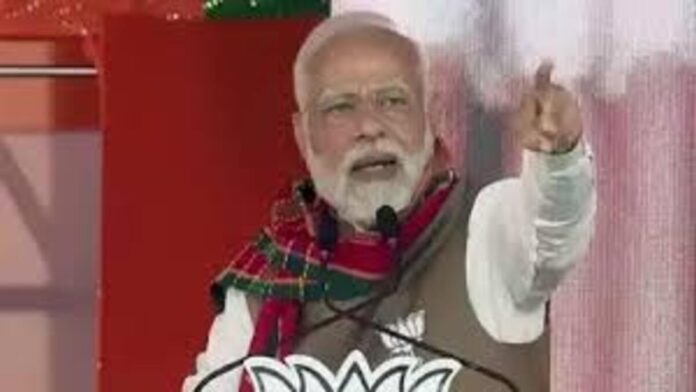
Prior to Holi and rabi harvesting, Prime Minister Narendra Modi will distribute the 13th installment of cash benefits totaling Rs 16,800 crore to more than eight crore qualified farmers under the PM-KISAN program on Monday.
Eligible farmers are given a cash benefit of Rs 6,000 per year in three equal installments of Rs 2,000 each every four months under the Pradhan Mantri Kisan Samman Nidhi (PM-KISAN). The recipients’ bank accounts receive a direct transfer of the funds.
Although the program was introduced in February 2019, it began to be executed in December 2018.
According to a statement issued by the government on Sunday, the 13th installment will be released by the prime minister at a ceremony in Belagavi, Karnataka.
The gathering is anticipated to draw more than a million participants, including beneficiaries of the Jal Jeevan Mission and PM-KISAN. There will also be Agriculture Secretary Manoj Ahuja and Union Agriculture Minister Narendra Singh Tomar.
The PM-KISAN scheme’s 11th and 12th installments were made available in May and October of 2022, respectively.
According to the statement, the PM-KISAN program has already significantly benefited farmers across the nation; this newest installment will increase their incomes even more and support the expansion of the agricultural industry.
More than 11 crore farmer families, mostly small and marginal farmers, have received more than Rs 2.25 lakh crore in funding through the program so far.
Notably, numerous installments totaling Rs. 1.75 lakh crore were given out to support these struggling farmers during the Covid-19 lockdown. More than three crore women beneficiaries of the scheme have gotten more than Rs 53,600 crores in funding overall.
This program has increased agricultural investments, loosened credit restrictions for farmers, and stimulated rural economic development. The ability of farmers to take risks has also grown, resulting in investments that are more fruitful.
The PM-KISAN funds, according to the International Food Research Institute (IFRI), assist recipients in covering their agricultural requirements as well as other costs like education, healthcare, and marriage.