


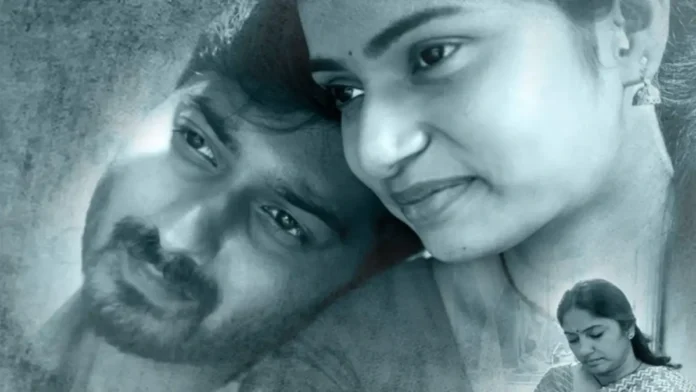
Looking at 23 (Iravai Moodu) just as a movie is difficult. half docu-drama, half social criticism, this independent Telugu film is based on actual events and was written and directed by Raj R. With a cast consisting of 25 up-and-coming artists as well as a few well-known figures, Raj raises concerns about whether the legal system treats everyone equally. “All are equal, but some are more equal than others,” as said by George Orwell in Animal Farm, establishes the tone of the movie, which encourages viewers to view crime and its offenders from many angles.
Three events that rocked undivided Andhra Pradesh in the 1990s served as the inspiration for the movie’s plot. At the Tsunduru massacre in 1991, Dalits were brutally subjected to caste violence. Two Dalit males set a bus on fire in Chilakaluripet in 1993, killing 23 people. A car bomb explosion in Hyderabad’s FilmNagar neighbourhood in 1997 is said to have killed 26 people and injured a number of others.
Without wasting any time, the movie dives right into the main plot, which examines the dark side of violence and the wounds it causes to both its victims and its offenders. The film opens with the Dalit slaughter in Tsunduru and how the criminals’ fates are determined by caste, wealth, and power.
Raj uses his artistic license to use a love story to make the story come to life. A young couple named Sagar (Teja) and Susheela (Tanmai) are pursuing their goal of getting a ₹10,000 loan to open an idli centre, generate a reliable source of income, and establish a family. She fights off a lustful boss while earning a pitiful amount as a daily wager. When he frantically looks for a loan, a dishonest official turns him away. His friend Das (played by Pavan Ramesh) has no qualms about being employed as a false witness in court proceedings and earning tiny amounts of money. Sagar and Das make a single mistake out of desperation, which turns into a momentous event.
One can easily predict what Sagar and Das’ future holds. Though the parallels end there, the scenes with Sagar and Susheela on opposite side of the prison bear a passing resemblance to the longing and separation in Sapta Sagaradaache Ello. As the story goes on, a number of characters appear, including a jailer who advocates for reforms, a psychologist (Jhansi), and a kind lawyer who supports Article 22 and the idea that every accused person has the right to defend his case.
The tale and its main characters are revealed in the first hour, and many viewpoints are examined in the second. A prisoner who is set to be freed begs the jailer that he is not prepared for the outside world in a poignant scenario. When the jailer finds out that the free man has done yet another horrific act a day later, he feels just as bad. 23 is as much about the bigger picture of the three main crime episodes as it is about these tiny moments.
The caste system used to determine the tasks that prisoners were given; those from the lower caste were assigned to clean the restrooms, according to a subplot. The movie discusses how prison libraries can be used to effect change.
Raj, who produced Paka: The River of Blood (Malayalam), directed Mallesham (Telugu), and directed 8am Metro (Hindi). adopts an independent style in this movie as well. He takes it a step further and alternates between fiction and non-fiction on occasion, removing himself from the confines of the mainstream and trying to start conversations on the psychology of prisoners and the potential for reform.
The movie does not hold back from forcing its characters to reflect, even as it shows sympathy for the accused from a lower caste. Since it excuses an act of violence, even if a cruel episode was an error, it still has terrible repercussions. A character is forced to consider the long-term effects, such as lingering hatred and animosity among the younger generation of the victims’ families, in addition to the acute guilt of destroying lives. There are no simple solutions.
The captivating tale of a youngster from a lower caste who was falsely accused of a crime was told in filmmaker Ram Jagadeesh’s Court a few weeks ago. With an underdog lawyer coming in to take necessary action, that movie adopted a mainstream strategy. 23 is a more intricate movie. Both the accused and their attorney must fight a protracted, solitary battle.
The writing is the film’s backbone and lending support is a large cast. In her debut film, Tanmai delivers a moving performance as a teen who weathers turbulent times. Teja delivers a sincere and measured performance, though occasionally he crumbles under the weight of a complex character. Pavan Ramesh is at ease playing the part-cynical friend Das, drawing from his experience of having worked in independent films. The lawyer and his wife are portrayed by two talented performers. Once more, Jhansi gives a powerful performance, especially when she is speaking to the jailer and the prisoners. She exudes the sense of maturity and wisdom that is necessary for a psychologist. Not to be overlooked are Mark Robin’s subtle score that enhances the story and Laxman Aelay’s production design.
23 is a courageous movie that does not back down from taking on difficult subjects; it is not an easy movie to see. Although it understands that some of its viewpoints will be hotly contested, it admirably does not back down. 23 is running in cinemas right now.