


Kerala’s state health minister, Veena George, reported on Thursday that a man who had just returned from the UAE had tested positive for monkeypox. He arrived at the airport in Thiruvananthapuram on Tuesday, and according to her, he is “very stable, with all vitals normal.”
To help the state, the federal government has dispatched a team that includes specialists from the National Center for Disease Control (NCDC).
“Nothing should cause you to worry or feel anxious. The patient is stable and every precaution is being taken, “No more information regarding the patient was provided, the state minister informed the news agency ANI. In addition to his mother and father, 11 other passengers from nearby seats, two taxi drivers, and an auto driver have been identified as his main connections. Hours before, she had stated that “a person who returned from abroad” was brought to a hospital with monkeypox symptoms. To the National Institute of Virology were transmitted his sample.
The federal government advised states to take safeguards in a letter earlier in the day. Monkeypox cases are uncommonly detected outside of Africa, therefore the government has released rules about isolation and contact tracing in May because to concerns over cases in Europe and America.
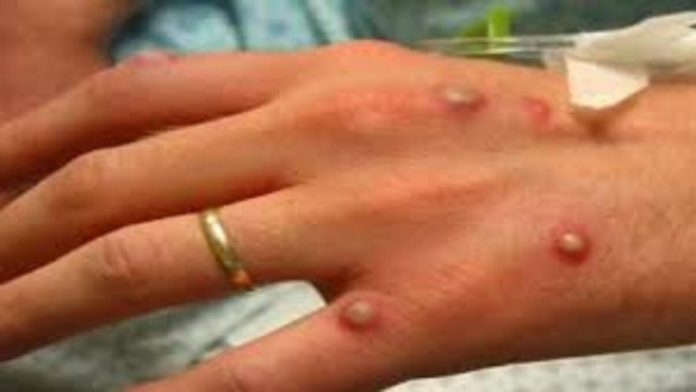
Aside from striking bumpy rashes, the virus also causes fever symptoms. Even though one of two strains is more harmful, that is typically controllable. Up to 10% of patients with the Congo strain pass away. With a fatality rate of only 1%, the West African strain is milder.
First discovered in 1958 in monkeys, hence the name. Nowadays, rats are thought to be the primary source of transmission. It spreads by direct contact with animals and, less frequently, with people.
A few instances of monkeypox, which hardly ever spreads outside of western and central Africa, were reported or suspected to have occurred in the United Kingdom, Portugal, and Spain two months ago, alarming scientists.
Because it belongs to the smallpox family, it also raises concern among virologists. In 1980, vaccinations made smallpox extinct, and the shot has since been phased out. However, that vaccine also offers monkeypox protection, thus the decline in immunization rates may be to blame for the emergence of new cases, according to specialists.