


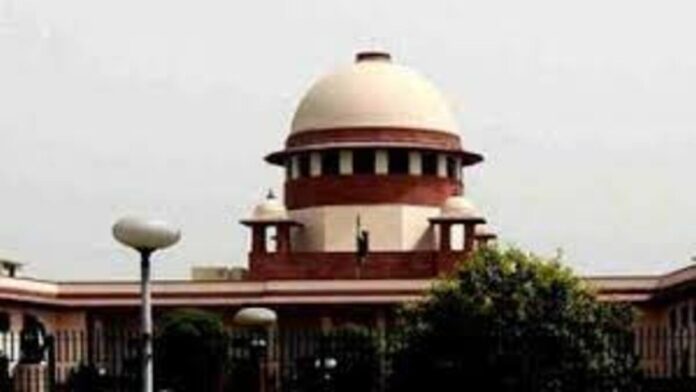
In a significant victory for the government, the Supreme Court today upheld a 10% employment and educational quota for the underprivileged, or EWS (Economically Weaker Sections), which was put in place right before the 2019 general elections.
A majority of the Supreme Court’s constitution bench ruled that the quota is not discriminatory and does not change the constitution’s fundamental framework. Including Chief Justice UU Lalit, who is retiring tomorrow, two judges dissented.
The other dissenting judge, Justice Ravindra Bhat, stated that while the constitution does not permit the exclusion of socially backward groups, he supported quotas for the economically underprivileged. “I regret not being able to agree with the consensus. Our constitution does not use words that exclude people. My well-considered opinion is that the inclusion of exclusionary language in the amendment weakens the foundation of social justice “said Justice Bhat.
Deputy Chief Justice: “I agree with the position that Justice Bhat has taken. The vote is currently 3:2.”
Ahead of crucial elections in Gujarat and Himachal Pradesh, the ruling BJP praised the historic decision and hailed Prime Minister Narendra Modi for achieving his “mission” to bring social justice to the nation’s underprivileged.
The EWS quota was established by the 103rd constitutional amendment and approved by the Centre in January 2019 not long after the BJP lost the elections in Madhya Pradesh, Rajasthan, and Chhattisgarh. It was immediately contested in front of the Supreme Court.
Affirmative action, which benefits historically underrepresented groups in Indian society like the Scheduled Castes, Scheduled Tribes (SC/ST), and Other Backward Classes, was disregarded by the quota (OBC). In petitions, it was questioned whether the quota altered the “basic structure” of the constitution and how it could exceed the national cap on reservation of 50% set by the Supreme Court in 1992. According to the petitioners, the quota was “a dishonest and covert attempt to destroy the concept of reservation.”
The administration stated that the quota wouldn’t affect the existing reservation for backward classes or diminish seats for the general category, but rather would help lift people out of poverty.
Congress and opposition parties did not protest the law. However, the Supreme Court heard up to 40 petitions challenging it, including one from the state of Tamil Nadu, which has some of the highest levels of racial discrimination in the nation.
The ruling in Tamil Nadu Chief Minister MK Stalin of the DMK criticised the decision and described it as a setback for the pursuit of social justice. However, organisations like Tejashwi Yadav’s RJD demanded a caste census right away.
Justice JB Pardiwala, one of the judges, said in court that reservations shouldn’t last indefinitely since that would give them a vested interest. “It is necessary to remove the people who have advanced from the lower ranks so that those in need might receive assistance. In order to make the methods for determining backward classes relevant in the modern era, “The judge noted.