


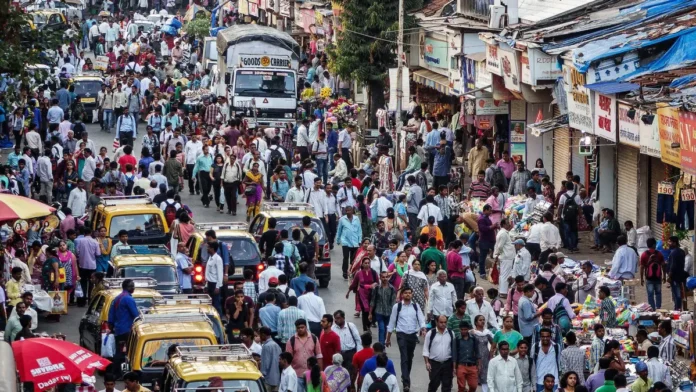
According to a new UN demographic report, India’s population is estimated to have reached 1.4639 billion (146.39 crore) by April, with the country’s total fertility rate (TFR) dropping to 1.9, now below the replacement level of 2.1.
The report, titled State of the World Population 2025: The Real Fertility Crisis, projects that India’s population will grow to around 1.7 billion (170 crore) before starting to decline in about 40 years. It also identifies India as the “world’s most populous nation,” with China’s population estimated at 1.4161 billion (141.61 crore).
These findings closely align with India’s own projections made in 2019 by a technical expert group, which estimated the country’s population to be around 1.411 billion (141.10 crore) by 2025. The decennial Census, originally scheduled for 2021, has been delayed and is now expected to be completed by March 2027; the last Census took place in 2011. Meanwhile, the latest Sample Registration System report from 2021, published by the Registrar General of India, puts the TFR at 2.0, unchanged from the previous year, and states that India has reached replacement-level fertility nationally.
For context, the TFR represents the average number of children a woman is expected to have over her reproductive years, while replacement level fertility is the rate needed to keep a population stable across generations. The UN report emphasizes that the real challenge is not overpopulation or underpopulation, but rather that millions of people are unable to achieve their desired fertility. It highlights the importance of reproductive agency, the freedom to make informed decisions about sex, contraception, and family planning, in today’s changing world.
India’s youth population remains substantial, with roughly 24% of people aged 0-14, 17% between 10-19, and 26% in the 10-24 age group. About 68% of the population falls within the working-age bracket of 15-64 years. The elderly population (65 and older) currently makes up 7% of the population, a figure expected to rise as life expectancy improves. The report estimates life expectancy at birth in India for 2025 to be 71 years for men and 74 years for women, echoing government projections.
The demographic data in the report is based on nationally representative household surveys such as Demographic and Health Surveys (DHS), Multiple Indicator Cluster Surveys (MICS), and estimates from various UN agencies. It also incorporates the latest population estimates and projections from the World Population Prospects: The 2024 Revision and model-based estimates for family planning indicators.