


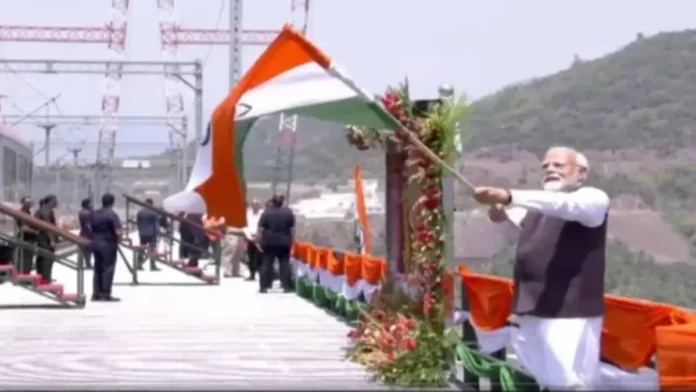
In addition to launching the Vande Bharat trains that connect Katra and Srinagar in Jammu and Kashmir, Prime Minister Narendra Modi is scheduled to officially open the imposing Chenab Bridge, which is regarded as the highest railway arch bridge in the world.
This historic occasion is a part of a bigger plan to start several construction projects in Katra, the sacred entrance to the temple of Mata Vaishno Devi, that will cost more than ₹46,000 crore. The Chenab Bridge’s completion and the launch of Vande Bharat services represent a turning point in improving connectivity throughout the area, with the potential to drastically cut travel times and promote deeper socioeconomic integration.
Rising 359 meters above the Chenab River and spanning an amazing 1,315 meters, the Chenab Bridge is a monument to India’s engineering skill. It is made of sturdy steel and is carefully designed to resist extreme wind and seismic conditions, guaranteeing long-term robustness in a difficult geographic setting. Its advantageous location is essential for getting past obstacles in nature and enabling smooth mobility. With Vande Bharat trains making the trip in roughly three hours, this architectural wonder would significantly reduce travel times between Katra and Srinagar, reducing current travel times by two to three hours. This demonstrates the government’s steadfast dedication to improving connectivity and infrastructure throughout the Union Territory.
The Prime Minister will also officially open parts of the massive 272-kilometer Udhampur-Srinagar-Baramulla Rail Link (USBRL) project in addition to the Chenab Bridge. The massive USBRL project, which was built at an estimated cost of ₹43,780 crore, consists of 943 bridges and 36 tunnels totalling an incredible 119 km. By establishing continuous, all-weather train connectivity between the Kashmir Valley and the rest of the nation, this ambitious network seeks to revolutionise regional mobility and promote deep socioeconomic integration. Large-scale rail infrastructure projects like this are naturally environmentally beneficial since they offer a less carbon-intensive mass transportation option than driving and flying, which helps create communities with zero net carbon emissions.
In a significant push for last-mile connectivity, particularly in sensitive border areas, Prime Minister Modi will also lay the foundation stone and inaugurate various road projects. These road initiatives are crucial for complementing the rail network, ensuring comprehensive multi-modal connectivity that reaches even remote populations. Improved road infrastructure will facilitate better access to markets, healthcare, and educational opportunities, fostering more equitable development across the region. Further demonstrating a commitment to enhancing social infrastructure, the Prime Minister will lay the foundation stone for the Shri Mata Vaishno Devi Institute of Medical Excellence in Katra, a project valued at over ₹350 crore. This institute will be the first medical college in Reasi district, substantially contributing to the healthcare infrastructure in the region. The establishment of such modern medical facilities is vital for improving public health outcomes, providing accessible healthcare services, and creating new employment opportunities, especially for women in healthcare, thereby promoting gender-neutral advancement.
The completion of these infrastructure initiatives in Jammu and Kashmir marks a major advancement for the people living there in terms of increased connectivity, economic expansion, and social well-being. In order to ensure that the advantages of development are widely distributed, these initiatives seek to unlock the Kashmir Valley’s full economic potential, promote sustainable tourism, and enhance the daily lives of its residents by bringing it closer to the rest of the country through strong and resilient transportation networks. The long-term stability and prosperity of this strategically significant area depend heavily on the development of dependable, all-weather infrastructure.