


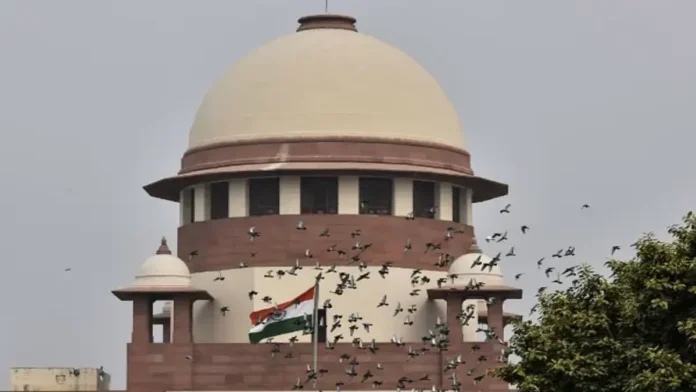
In a landmark decision that could affect judicial nominations nationwide, the Supreme Court maintained on Monday that applicants must possess a minimum of three years of legal practice before they can appear for civil judge (junior division) examinations.
“We hold that the three-year minimum practice requirement to appear for civil judges junior division exam is restored,” said Justice AG Masih, who delivered the decision on behalf of the bench, which included Chief Justice of India BR Gavai.
The issue arose from several petitions contesting a regulation that the Madhya Pradesh High Court had instituted by amending its judicial service regulations in 2002. In order to be qualified for judicial service exams, candidates were required by this amendment to have at least three years of experience as active advocates. Several other states eventually adopted this practice-based eligibility criteria.
The rule’s main justification was to guarantee that those entering the courts had the necessary courtroom experience and practical legal knowledge. The rule was endorsed by the Bar Council of India and several state bar councils, which emphasised that trial experience helps judges better understand procedural intricacies and render well-informed decisions, protecting the judiciary’s reputation.
However, professors and recent law graduates fiercely opposed the ruling. The three-year term, according to the petitioners, was a “arbitrary barrier” that went against equal opportunity standards. They argued that by placing needless restrictions on access to judicial careers, the rule went beyond constitutional obligations and discouraged young aspirants.
The interpretation of Article 233(2) of the Constitution, which deals with the qualifications of applicants for appointment as district judges, was the main legal question. This article is silent on the requirements for junior division civil judges, however it does require seven years of legal practice for appointment to the district judiciary. As a result, state judicial service regulations have changed, with some requiring prior experience and others permitting recent graduates to apply directly.
In the seminal 2002 decision All India Judges Association v. Union of India, the Supreme Court re-examined its previous findings, emphasising the value of practical experience without making it a legally obligatory requirement. However, the current decision reinstates and strengthens the requirement of experience for entry-level judicial positions.
By upholding the rule, the Court signalled its alignment with the view that real-world advocacy experience forms an essential foundation for judicial competence at even the entry levels.