


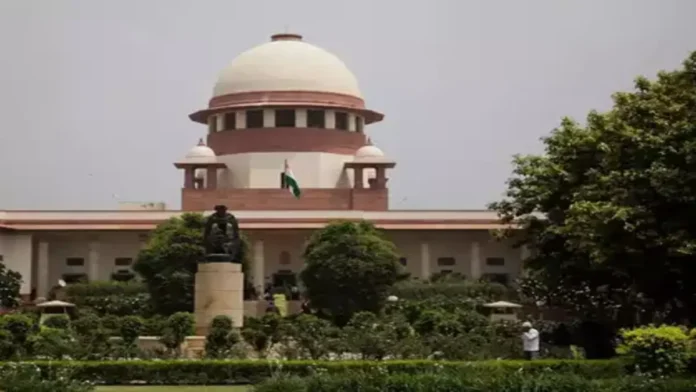
On Wednesday, February 12, 2025, Supreme Court Justice B.R. Gavai questioned if unrestricted freebies lead the impoverished into a life of parasitism by denying them the opportunity to seek employment, integrate into society, and support the advancement of the country. “Rather than making them contribute to the development of the nation, are we not creating a sort of parasite? Because of these benefits, people do not want to work,” Justice Gavai, heading a Bench also comprising Justice A.G. Masih, observed orally.
The Bench was considering petitions pertaining to the national capital’s urban homeless population’s insufficient access to night shelters. A lawyer once claimed that the night shelters that were in place were unfit for human habitation. “Between a shelter which is uninhabitable and sleeping on the road, what is more preferable?” Justice Gavai countered.
Free rationing and welfare programs for the urban homeless, who were typically newcomers from the country’s rural areas looking for job, were also discussed in court. According to Justice Gavai, taking action to integrate the underprivileged and impoverished into society is preferable to giving them freebies. “Look at the practical aspects… Nobody wants to work for they will get free ration… We have recognised the rights to shelter and work. But at the same time, should it not be balanced?” Justice Gavai asked.
On behalf of the petitioners, advocate Prashant Bhushan argued that the impoverished in rural areas move to cities in search of employment. “If they have work, they will work. They have come to the city to find work. The jobs they get are menial… They cannot even afford shelter,” Mr. Bhushan addressed the Bench.
The Center’s attorney general, R. Venkataramani, told the court that the government was developing plans to help reduce urban poverty. These plans would provide urban homeless people with housing. The Center was given a six-week deadline by the court to submit an affidavit outlining the time needed to finalize and implement the schemes as well as the topics they would cover.
Senior counsel Devadutt Kamat, speaking on behalf of the Delhi Urban Shelter Improvement Board (DUSIB), argued that although night shelters are well-equipped and officials visit the homeless to persuade them to attend, they reject. Since the right to safety and shelter is a fundamental right, the supreme court has been advocating for the welfare of the impoverished and homeless.
In 2016, the highest court noted that assistance programs, like as the National Urban Livelihoods Mission (NULM) initiative, remained a pipe dream, causing the city’s impoverished to shiver in the winter cold.
At the time, the court ordered the creation of a committee led by Justice Kailash Gambhir, a former judge of the Delhi High Court, to confirm the existence of night shelters and whether their activities complied with NULM regulations. Mr. Bhushan had argued that the DUSIB had destroyed nine shelter homes and that the overall number of shelter homes in Delhi was only about 17,000 people. In response, Mr. Kamat stated that six makeshift shelters have been abandoned since June 2023 after being destroyed by floods in the Yamuna River.