


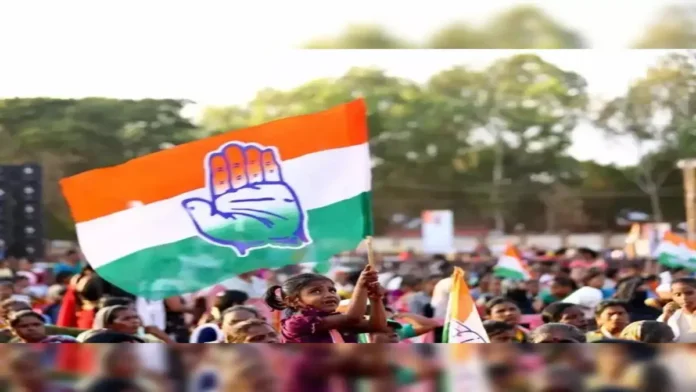
On Thursday, February 6, 2025, the Congress stated that a uniform civil code, as envisioned in Article 44 of the Constitution, can only be implemented following extensive deliberation aimed at fostering a true consensus and cannot be used as a political tool to maintain the nation’s “permanent polarization.”
Days after the Gujarat government established a committee led by a retired Supreme Court judge to determine whether the state needed the Uniform Civil Code (UCC) and draft legislation for it, the opposition party made its claim. The BJP government in Uttarakhand had already implemented the UCC in the state.
The Uttarakhand UCC, according to Congress general secretary in-charge of communications Jairam Ramesh, is a badly written and extremely invasive piece of law. “It is not an instrument of legal reform in the slightest as there is nothing that addresses the actual concerns expressed with regard to family law over the last decade. It has been forcibly imposed as an integral part of the BJP’s divisive agenda,” Mr. Ramesh said in a statement.
Following the recent implementation of a unified civil code in Uttarakhand that exempts scheduled tribes, Mr. Ramesh noted that the Gujarat government has announced the creation of a panel to develop a common civil code to be implemented in the State. “The Modi Government’s 21st Law Commission submitted its 182-page ‘Consultation Paper on Reform of Family Law’ on August 31, 2018,” he stated.
“While the diversity of Indian culture can and should be celebrated, certain groups or weaker sections of society must not be dis-privileged in the process,” reads paragraph 1.15 of the consultation paper. It is not necessary to eliminate all differences in order to resolve this conflict. “This Commission has therefore dealt with laws that are discriminatory rather than providing a uniform civil code which is neither necessary nor desirable at this stage. Most countries are now moving towards recognition of difference and the mere existence of difference does not imply discrimination, but is indicative of a robust democracy,” Mr. Ramesh pointed out.
The 22nd Law Commission of India then announced its intention to look into the topic of a uniform civil code in a press release issued on June 14, 2023, he stated. “This was being done, the press note clarified, on a reference sent by the Ministry of Law and Justice. However, the 22nd Law Commission was wound up on August 31st 2024 without submitting its report on the uniform civil code.The 23rd Law Commission was announced on September 3rd, 2024, but its composition has not yet been made public,” he said.
The Constituent Assembly could not have envisioned a vast number of identical civil codes passed in state legislatures piecemeal, according to Mr. Ramesh, even though they agreed with what became Article 44 in the Indian Constitution. “Multiple uniform civil codes go against the very idea of what Article 44 states as a uniform civil code throughout the territory of India. A uniform civil code as envisaged in Article 44 can only come about after widespread debate and discussion with the objective of building a genuine consensus,” he said. It cannot become a political instrument designed to keep the country in a state of permanent polarisation, Mr. Ramesh asserted.