


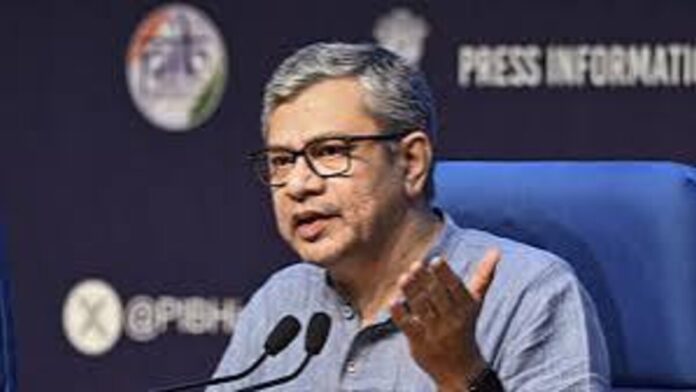
The new draft Broadcasting Services (Regulation) Bill, 2024, which sparked controversy and outrage over worries that the government was attempting to assert more control over internet material, is reportedly no longer in the Ministry of Information and Broadcasting’s possession. The government’s authority to regulate speech and expression as well as the draft Bill itself has been called into question on a number of occasions.
A few stakeholders were given access to the latest draft Bill by the ministry last month, and they were asked to provide feedback.
The ministry has now requested that the stakeholders return the draft Bill, according to at least three people who confirmed this to a news outlet. These sources included two executives from the industry and a senior government official. According to sources, the ministry called the stakeholders to ask them to return their copies of the draft Bill.
According to insiders, the ministry is anticipated to start over and develop a fresh plan.
The ministry did not respond to requests for a comment on the issue. But, in a statement posted on X at night, the ministry referred to an earlier draft Bill placed in public domain in November last year, and said it “is holding a series of consultations with the stakeholders” and is offering them “further additional time” till October 15 to issue their comments. “A fresh draft will be published after detailed consultations,” it said.
The new draft Bill, which was provided with a few stakeholders last month in a watermarked format to avoid any leaks, and the fact that the government has asked them to return these copies were not mentioned in the statement from the ministry.
The statement has confused stakeholders, especially those who were not part of the group with which the government shared the 2024 version of the draft Bill. “Are we supposed to send our comments on the November 2023 version of the now withdrawn draft, because a copy was never formally shared with us,” said a person from the industry, requesting anonymity.
The Bill addresses television broadcasting and aims to replace the 1995 Cable Television Networks (Regulation) Act. The ministry had requested feedback on a draft bill in November of last year, which expanded the legal framework for the broadcasting industry to include OTT content, digital news, and current affairs.
Nonetheless, the 2023 draft Bill’s focus was considerably changed by the current draft Bill, which was quietly provided with a few stakeholders last month.
After attempting to define a “digital news broadcaster” broadly to include independent content creators and going beyond OTT content and digital news to include social media accounts and online video creators, the newly proposed draft bill drew harsh criticism. It also suggested prior registration with the government.
Fearing government overreach, huge internet corporations privately as well as independent content providers publicly resisted.
The news agency has discovered that there is a significant disagreement inside the ministry’s bureaucracy on whether or not non-news online content makers should be included by the Bill. As per the draft Bill, such creators would have fallen under the category of OTT broadcasters. This is one of the reasons why the government wants to rework the contours of the Bill, said sources.
The latest draft sought to define “digital news broadcasters” to include “publisher of news and current affairs content”, which means any person who broadcasts news and current affairs programmes through an online paper, news portal, website, social media intermediary, or other similar medium as part of a systematic business, professional or commercial activity but excluding replica e-papers.
This definition could include users on YouTube, Instagram, and even X, who generate advertising revenue through paid subscriptions or monetise their social media accounts through affiliate activities.
It allowed the government to specify a threshold for the number of subscribers or viewers for OTT broadcasters, who would then have to intimate it of their existence and operations and also adhere to a programme code and an advertisement code.
These online content creators would have to set up a content evaluation committee (CEC), and “strive to make” the committee diverse by including individuals with knowledge of different social groups, women, child welfare, Scheduled Castes, Scheduled Tribes and minorities. The names of people in their CEC would have to be shared with the government.
Only programs that have been approved by the CEC would be permitted to be operated by creators. However, programs that are already approved by a legislative agency for public viewing in India, educational programs, news and current affairs programs, live events, children’s animation, and other programs that the government may designate wouldn’t need this kind of certification.
The Bill also sought to validate the “Code of Ethics” prescribed under the Information Technology (Intermediary Guidelines and Digital Media Ethics Code) Rules, 2021, which has been stayed by the Bombay High Court and the Madras High Court.
A senior government official had previously stated that the “role a number of independent content creators played in the run-up to the 2024 Lok Sabha polls” was a major factor in the draft Bill’s notable scope expansion when compared to the version that was made available for public consultation in November 2023.