


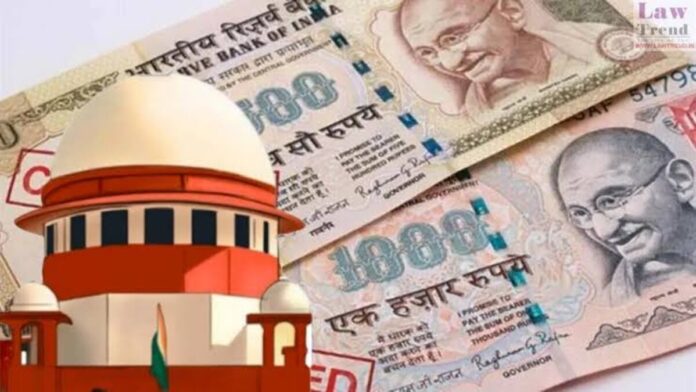
Approximately 98% of the ₹500 and ₹1000 notes that were demonetised were returned to the Reserve Bank of India (RBI). Speaking on Saturday at the fifth annual Courts and the Constitution conference, held at the NALSAR University of Law in Hyderabad, Supreme Court judge Justice B.V. Nagarathna said, “I thought it was a way of converting black money into white.”
“We all know what happened on November 8, 2016 when ₹500 and ₹1000 notes were demonetised. The interesting aspect is that in the Indian economy at that time, ₹500 and ₹1000 notes comprised 86% of the currency, which the central government lost sight of while demonetising the currency notes,” said Justice Nagarathna.
She went on to explain that a labourer who worked on those days and was given a ₹500 or ₹1000 note at the end of the workday had to go exchange it before purchasing daily necessities.
Judge Nagarathna stated that the plight of the average person truly moved her, hence she was forced to disagree with demonetisation. He emphasised the arbitrary nature of the decision-making process and its lack of legal justification before calling for demonetisation. Demonetisation was not a justification for India to go from paper to plastic money, she continued.
She emphasised the high constitutional status of the governor’s position during her speech and warned against instances in which governors sit on measures passed by popularly elected legislatures forever, citing the case of the Governor of Punjab. In another example of gubernatorial overreach, she cited the Maharashtra Legislative Assembly case, in which the governor lacked sufficient evidence to declare the floor test.
Also present at the conference were Justice Sapana Pradhan Malla from the Supreme Court of Nepal and Justice Syed Mansoor Ali Shah from the Supreme Court of Pakistan. The session also featured contributions from Justice Alok Aradhe, Chief Justice of Telangana High Court and Chancellor of NALSAR.