


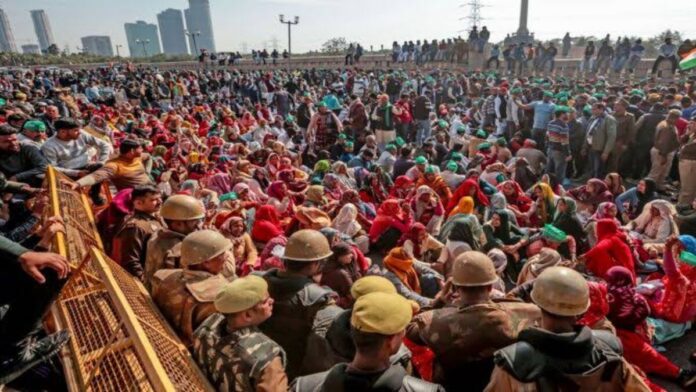
‘Delhi Chalo’ protesting farmers will start their march today in an effort to pressure the Centre to respond to their demands. The most important of these requests is the passing of legislation that ensures a minimum support price (MSP) for crops, which is a vital lifeline for farmers dealing with unstable markets.
The revocation of the Electricity Act 2020, payment to the families of farmers slain in Lakhimpur Kheri, and the dismissal of legal actions against members of the farmers’ movement are other major areas of disagreement. Despite the fact that these difficulties were resolved after midnight, the farmers are adamant in their resolution and maintain that the government has not kept its commitments from two years ago.
One of the farmers’ worries was addressed during the conference when it became clear that the government was willing to drop cases against farmers that had been filed during the 2020–21 protests. The farmers emphasise that a legal guarantee for MSP is essential to their demands, though, and they insist on it.
Farmer leaders including Sarwan Singh Pandher of the Kisan Mazdoor Sangharsh Committee and Jagjit Singh Dallewal of the Samyukta Kisan Morcha (Non-Political) have expressed doubts about the government’s commitment to implementing the larger set of demands.
The government suggests forming a committee to discuss debt waivers, legal guarantees for MSP, and putting the Swaminathan Commission’s recommendations into practice. Farmers’ representatives, however, are not persuaded.
The demands of the farmers go beyond what has already been discussed and include payment to the families of farmers who lost their lives during the previous uprising as well as the reinstatement of the Land Acquisition Act of 2013 and withdrawal from the World Trade Organisation.
As the ‘Delhi Chalo’ march gains momentum, security measures at Singhu, Ghazipur, and Tikri borders have intensified. The Delhi police have implemented stringent measures, including the installation of nails along with barricades and the use of cranes and earthmovers to block the road, aiming to prevent the entry of protesting vehicles into the city.