


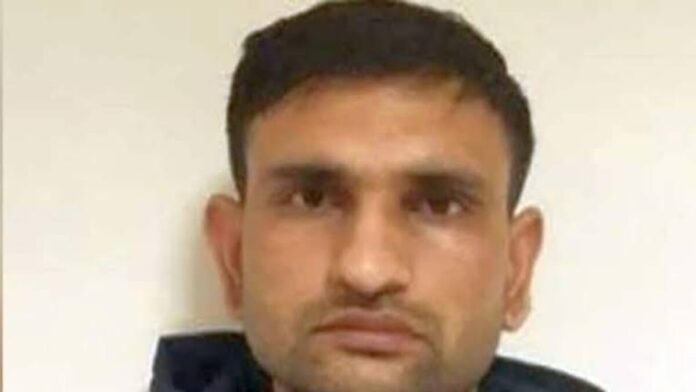
Satendra Siwal, a worker at the Indian Embassy in Moscow, was taken into custody by the Uttar Pradesh police’s (UP ATS) Anti-Terrorist Squad on Sunday in Lucknow, marking a significant breakthrough.
Siwal, a resident of Shahmahiuddinpur hamlet in Hapur and the son of Jaiveer Singh, was allegedly working for ISI, the intelligence agency of Pakistan.
Siwal was brought before the local court by the UP ATS, and a 14-day judicial remand was imposed against him.
The police sources said that on Monday, the ATS would petition the court to accept Siwal’s remand. Two cell phones, an Aadhar card, a PAN card, his identity card, and Rs. 600 in cash were also found by the ATS in Uttar Pradesh.
According to the ATS, Satendra Siwal was engaged in anti-India activities and was bribing his ISI handlers over the border with important classified information.
Satendra Siwal had been employed at the Indian Embassy in Moscow since 2021, according to a statement released by UP ATS. He has been employed by the Indian Embassy in Moscow as Multi-Tasking Staff with an India-Based Assignment.
The ATS asserted that it had evidence from covert sources and surveillance that certain employees of the External Affairs ministry were being paid off by ISI handlers to divulge critical information about India installations and other specifics, thereby posing a grave risk to the security of India.
Referencing their surveillance, the UP ATS stated that Satendra Siwal was among the MEA employees who had communication with ISI handlers.
According to the ATS statement, Satendra Siwal was first contacted for questioning by the UP ATS’s Meerut field unit. Siwal was unable to provide the ATS with a satisfactory response to their questions during the grilling. He even acknowledged having participated in ISI espionage when questioned further.
The UP ATS team then arrested Siwal and filed a formal complaint against him at the Gomtinagar police station in Lucknow, citing Section 121 of the Indian Penal Code (IPC) (waging war against the country) and 3/5/9 of the Official Secret Act-1923.
The ATS stated in their statement that it discovered Siwal was corresponding with the ISI handlers’ network through electronic and physical surveillance.
He shared information about the defence ministry’s, foreign affairs ministry’s, and Indian military establishments’ strategic initiatives. For cash, the ATS exposed that he was spying.