


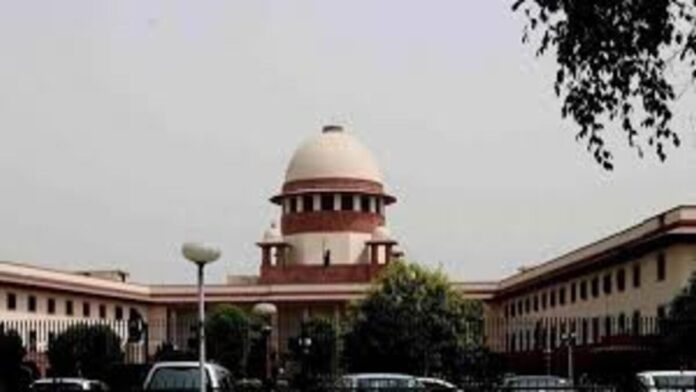
On Thursday, the Supreme Court of India ruled that, similar to how the CBI Director is chosen, the chief election commissioner and other election commissioners will be chosen by a powerful group comprised of the prime minister, the leader of the opposition, and the chief justice of India.
The five-judge Constitution Bench, presided over by Justice KM Joseph, made it clear that this election commissioner appointment practice will be followed up until a relevant legislation is passed by the Parliament.
The panel, which also included Justices Ajay Rastogi, Aniruddha Bose, Hrishikesh Roy, and CT Ravikumar, was ruling on a group of applications that called for changes to the selection procedure for Election Commission of India members.
Justice Rastogi made it clear that the reasons for the removal of Election Commissioners should be the same as those for the Chief Election Commissioner in a concurring but distinct judgment.
The bench stated, “Democracy is inexplicably intertwined with authority to the people, highlighting a gap in the law. If held in a free and fair way, democracy enables the peaceful revolution in the hands of the common man.
The bench stated, “Democracy can only thrive if all stakeholders work toward maintaining the integrity of the election process, in order to reflect the will of the people.
An election commission that does not uphold the law is opposed to democracy. Its broad range of powers, if used improperly or against the Constitution, have an impact on the results of political groups. The Election Commission must be impartial; it is not allowed to make this claim and then behave unfairly. An individual who is under the state’s control is unable to think independently. An autonomous person won’t be subservient to those in positions of authority, Justice Joseph read from the operative part.
Article 324 has a special history. There have been several decades since. Different political parties have not proposed a legislation. A legislation cannot maintain the status quo, which gives the executive branch sole discretion over hiring decisions. The plaintiffs have noted that there is a gap in the law. It is obvious that political parties would have a reason not to pursue legislation. The court stated that a party in power would have an unquenchable desire to maintain that position through a subservient Commission.
Justice Joseph continued, “Any procedure aimed at enhancing the electoral process before this Court must be taken into consideration. When the findings are made public, the situation essentially is decided. Democracy, in Lincoln’s words, is government by, for, and by the people. The rules should be followed by the government.
The bench expressed worry about the current situation, saying, “Power becomes the aim of political parties to an end. The filthiness of this process of acquiring power is what disturbs me and forms the basis of the petitioners’ complaints. Only when all parties involved work to preserve the integrity of the electoral process and ensure that it accurately reflects the will of the people will democracy thrive. The tendency to abuse elections has increased with the increase in media coverage and other factors.