


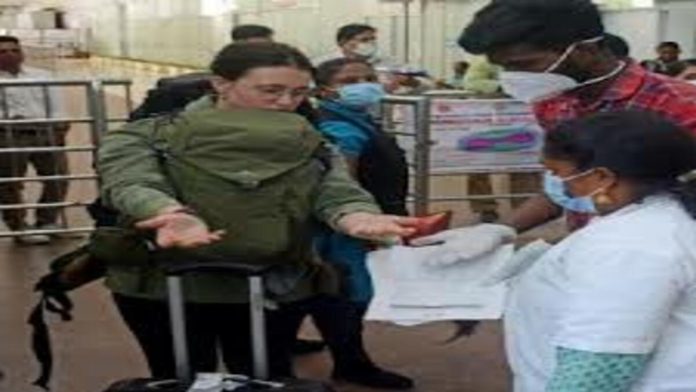
As a second confirmed case of monkeypox was reported from the nation on Monday, the Center advised’strict health screening’ of all overseas travellers upon arrival, according to persons familiar with the situation.
The National Institute of Virology of the government, located in Pune, received samples of suspected cases and recommended screening for travelers entering from African nations.
As part of the review process, “states, airport and port health officers were advised to ensure strict health screening of all international travellers to minimize the risk of importation of monkeypox disease,” the Union Ministry of Health and Family Welfare said in a statement. The review looked at how well the health screening of foreign travelers arriving in India at airports and ports.
Airport and port health officials as well as regional directors from the Union Health Ministry’s regional offices attended the conference.
According to the MoHFW’s “Guidelines for Management of Monkeypox Disease,” they received advice and were reoriented towards the clinical presentation of monkeypox disease. In order to streamline health screening procedures and to ensure appropriate connections with hospital facilities designated to each port of entry for prompt referral and isolation, they were also advised to coordinate with other stakeholder agencies like Immigration at international ports and airports, according to a statement from the health ministry.
The World Health Organization (WHO) describes monkeypox as a viral zoonosis, or an animal-to-human virus transmission, with symptoms like those once experienced by people with smallpox, though less severe clinically.
Humans can contract monkeypox through coming into intimate contact with an animal or person who has the disease, as well as by coming into contact with contaminated objects. The condition often has a two- to four-week symptom duration and is self-limited. According to the WHO, it can be spread from one person to another through close contact with lesions, bodily fluids, respiratory droplets, and infected objects like bedding.
After the first case was reported from the Kollam district on July 14, the health ministry dispatched a central team of experts to Kerala to assess the situation.
A senior official from the health ministry who asked to remain anonymous said, “The team is still on the ground assessing the situation.”
“All contacts have been tracked and are being carefully watched,” a different official stated. Although there are now no significant reasons for alarm, a close eye is kept.